
The Case for Small Towns
Here’s our hot take of the moment – right now, you’re better off in a small town compared to a big city in the US.
The constant messaging of bigger is better, faster is better, louder is better, and the closer you are to the center of the action, the more complete your life is supposed to feel does not hold up in 2026.
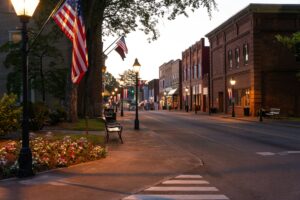
Those ideas start looking a bit shaky once regular life enters the room.
Rent comes due, traffic starts eating entire afternoons, parking becomes its own minor crisis, noise sticks around late into the night, and the simple act of walking to buy groceries makes you mentally and physically exhausted.
In a lot of cases, we think a nearby small town ends up giving people something far more useful: ease.
Small towns in the United States, in fact, have been creating a better day-to-day experience than the big cities next to them in 2026.
Not every single time, of course, and not in every category for every person, yet across a lot of practical measurements, they come out ahead more often than many people expect.
Housing is usually less punishing. Streets are calmer. Stress often stays lower. There is often more room, more quiet, and a little more dignity in how ordinary life unfolds.
Most people are not living inside a tourism ad. They are trying to sleep well, afford a decent home, get to work without losing their minds, raise children in a manageable setting, walk outside without constant overload, and keep enough money left over for something besides survival.
Small towns, more or less, keep performing well on those basic needs.
The interesting part is that small-town living does not always mean isolation or total separation from opportunity. A person can live in a smaller community outside Charlotte, Denver, Tampa, Nashville, Phoenix, Minneapolis, or Dallas and still benefit from the larger regional economy. That arrangement, in a way, gives many residents the best parts of city access without requiring them to absorb all the city strain at home.
This article makes the case that small towns are often more pleasant to live in than the larger cities nearby right now.
It looks at cost of living, noise, stress, traffic, community life, space, quality of life, and the little details that shape a week. The broad pattern is pretty clear, and once you notice it, it becomes hard to ignore.
Methodology
This article was built around the kinds of measurements that shape regular life.
Our research framework focused on major metrics like housing costs, rent pressure, property size, commuting time, traffic intensity, parking difficulty, noise pollution, crowding, day-to-day stress, neighborhood feel, access to outdoor space, and the general comfort of daily routines.
The topic, too, was approached through comparisons across several parts of the United States instead of just one region. Southern metro areas, western growth corridors, Midwestern urban regions, and parts of the Northeast all provide examples where nearby small towns often feel more livable than the large city core. That consistency across regions, in fact, is part of what makes the argument strong.
The goal here, of course, was not to pretend every small town is charming or every big city is miserable.
Some towns are under-resourced. Some cities are still highly attractive for certain careers or lifestyles. Still, the wider pattern shows that when daily comfort is measured honestly, not theatrically, smaller communities often provide a more pleasant place to build a life.
Why Small Towns Keep Winning on Everyday Comfort in 2026
The strongest case for small towns, firstly, begins with the ordinary rhythm of the day.
Big cities can be stimulating, yes, but stimulation is not the same thing as comfort.
A place can be exciting and still be tiring, expensive, noisy, and kind of difficult all the time. That contradiction sits right at the center of urban life in America.
Small towns, by contrast, usually ask less from the nervous system. There is often less hurry, less crowd pressure, less traffic aggression, less random waiting, and fewer situations where people have to fight for space. It turns into better sleep, more patience, less irritation, and a schedule that feels manageable instead of constantly under siege.
Take something simple, for example, like running errands after work.
In a large city, that trip may involve congested roads, slow intersections, packed parking lots, long checkout lines, and the annoying feeling that everyone is operating under mild frustration.
In a small town, the same basic outing can be quick, direct, and nearly forgettable. That sounds minor, yet it adds up with incredible speed over months and years.
In other words, small towns are often better not because they provide one dramatic advantage, but because they reduce dozens of little annoyances that pile up into a heavy life. That cumulative effect is huge. People do not burn out only from giant disasters. They burn out, very often, from daily friction.
Cost of Living Feels More Acceptable in Small Towns
Housing, naturally, is where many people first notice the difference.
Big cities across the country have pushed home prices and rent so high that even fairly solid incomes can feel strangely inadequate. Residents pay more, get less square footage, share more walls, accept less privacy, and still often feel financially stretched.
Nearby small towns, meanwhile, usually offer a different equation.
The mortgage may be lower. Rent may still be high in some regions, sure, but often less brutal than the city core. Yards are more common. Storage exists. Parking is not considered an upscale luxury.
A person can sometimes buy an actual house rather than a cramped urban compromise marketed as efficient living.
That housing difference is not just about comfort, either. It changes the emotional structure of a household budget.
When so much income is not being swallowed by rent, people often get breathing room. They can save. They can repair things. They can travel sometimes. They can handle an emergency without the whole month collapsing. That kind of financial margin is extremely important, and cities very often erase it.
The Dallas region, for instance, shows this pattern clearly. Living in central Dallas can mean high rent, costly parking, crowded freeways, and a constant sense that every convenience carries a premium.
A smaller town outside the main urban core, on the other hand, may give a resident more house, calmer surroundings, and monthly costs that do not feel like a punishment for existing.
The Nashville area, too, gives a useful example. The city has energy and cultural pull, absolutely, yet nearby smaller communities often make far more sense for households that care about sustainability over spectacle. A cheaper mortgage, less competition for housing, less road chaos, and easier errands can improve life in very plain but very meaningful ways.
And it is not only about the home payment itself. Big cities, in fact, often make all the side costs worse. Parking, childcare, insurance, pet care, entertainment, delivery fees, home repairs, and even a quick lunch can carry inflated prices. Small towns are not always cheap, obviously, but they are frequently less relentless.
Earn back a Whole Extra Day per Week Not Sitting in Traffic
Traffic steals time, raises stress, and turns normal routines into draining logistical events.
Living in a large city often means planning life around congestion, and that is a bigger loss than many urban enthusiasts admit.
In a small town, a ten-minute drive is often actually ten minutes.
That sounds almost funny to say out loud, yet anyone who has lived in a congested metro area knows how valuable that reliability is.
School drop-offs become simpler, doctor visits are easier to schedule, and events like meeting a friend for dinner does not require 10 to 20 minutes of buffer time to account for traffic or finding parking.
A person who saves even forty minutes a day through shorter commutes and easier errands, in fact, gets back a huge block of life over the course of a year.
Big cities are full of hidden time taxes. Small towns usually charge fewer of them.
The Atlanta region is a classic example. The urban core and the busiest surrounding corridors can wear residents down with long commute windows, crash delays, and a general feeling that the roads are always one bad moment away from dysfunction.
A smaller community beyond the densest zones may still connect someone to the regional economy, yet the home routine often feels much less punishing.
This matters emotionally, too. Heavy traffic is not just slower movement. It is noise, aggression, unpredictability, and low-grade tension before the workday even begins.
People arrive tired. They come home annoyed.
That repeated strain shapes mood and relationships, and small towns very often spare residents a lot of it.
Noise Pollution Is a Bigger Problem Than You Realize
Noise, actually, gets underestimated because people can adapt to it enough to stop commenting on it.
But adaptation is not the same thing as comfort.
Examples like sirens at night, construction at dawn, nightlife spillover, engine noise, helicopters, traffic hum, apartment wall noise, and all the rest seem insignificant but can actually be quite insidious.
These micro stressors act in keeping the body in a mildly activated state all the time even when the person says they are used to it.
Small towns usually feel quieter in a deeper way.
Not silent, of course, because real towns still have trucks, lawn equipment, local events, barking dogs, and the rest of normal life.
Still, the background level is often lower, especially at night. That leads to better sleep, fewer interruptions, and less sensory fatigue.
That makes you feel like home is a place to recover.
That is a massive advantage. Sleep quality affects memory, mood, health, work performance, patience, and even spending habits. A quieter environment, in that case, becomes part of the whole structure of well-being.
Not only are you physiologically reducing your stressors, but you start to psychologically realize it as well, creating a powerful positive loop.
In bigger cities, many people end up paying more money to live in environments that interrupt them more often.
That alone is a strange bargain.
The noise never fully leaves. It is in the road, the walls, the sidewalks, the late hours, the early hours. Small towns, by comparison, often let night be night.
Stress Drops When Life Stops Feeling Like Constant Competition
There is something else going on in big cities that is harder to measure, yet very easy to feel.
Everything can begin to seem competitive.
Housing is competitive. Parking is competitive. Reservation times are competitive. School access can be competitive. Public space feels crowded. Services are overloaded.
Even relaxation starts requiring effort, planning, and sometimes money.
That creates a strange atmosphere where basic living feels like a series of minor contests. You are not always aware of it while you are inside it, yet once you leave it, the difference is kind of startling.
Small towns often feel less combative. Not perfect, not idyllic, but less demanding in that specific psychological way.
The lower crowd pressure helps a lot. There are fewer packed sidewalks, fewer packed roads, fewer packed businesses, and therefore, fewer packed apartment buildings.
You can see how that extra breathing room affects how people move through a day.
They hurry less. They snap less. There is often a little more courtesy floating around simply because the environment is not squeezing everyone at once.
Stress, in fact, is where many small-town advantages combine. Lower housing pressure, less traffic, lower noise, simpler logistics, and more physical space all work together.
No single factor has to be magical, but instead they help to reinforce each other. That is why a small town can feel so much better overall even if the difference in any one category seems moderate on paper.
Space Still Matters
Modern city culture, sometimes, treats limited space like a sign of sophistication.
Tiny apartments get dressed up as intentional living. Shared walls become normal. Lack of storage gets framed as minimalism. People adapt, of course, because they have to, yet adaptation should not always be confused with preference.
More space generally makes life easier. That is still true, and it remains true for a lot of Americans.
A spare room can become an office to work-from-home. A yard can become play space. A garage can store what needs storing instead of forcing clutter into the living room. A bigger kitchen can actually function for a family.
Small towns often provide that space more affordably. A home does not have to feel like a puzzle where every object must justify its existence. That kind of practical comfort is one reason families, remote workers, and older residents frequently prefer smaller communities over nearby big cities.
Remote work has made this even more obvious.
When people no longer need to show up downtown five days a week, the logic of paying premium urban prices for less room begins to weaken. A small town within regional reach suddenly looks much smarter. Plenty of workers have figured that out.
Community Feels Real
Big cities have population density, yes, but density does not automatically equate to forging connections.
A person can be surrounded by people and still feel weirdly disconnected. That happens a lot in major urban areas. Everyone is busy, everyone is moving, and social contact often becomes transactional rather than rooted.
Small towns, on the other hand, often create more repeated human contact. You see the same cashier. The same neighbor walks by. School events draw familiar faces.
Local sports, faith communities, volunteer groups, festivals, and civic gatherings hold a little more weight. That repetition builds trust over time. It’s just easier to run into the same folks, which builds this idea of togetherness.
If someone gets sick, loses a job, needs childcare help, or takes on elder care, a place with stronger community ties can make a major difference. Support in a small town is naturally not automatic, yet the odds of people actually knowing one another are often better than in a giant city where life is fragmented.
A smaller town outside Minneapolis, or outside Indianapolis, or outside Raleigh may not have the same nonstop volume of events as the central city. Still, many residents would rather have a handful of recurring, meaningful relationships than a thousand distant options they barely use. That trade feels worthwhile for a lot of people.
Nature Is Usually Closer
One underrated part of small-town life, actually, is access to ordinary outdoor relief.
Not every town sits beside a lake or mountain range, clearly, yet many smaller communities place residents closer to trails, open skies, local parks, rivers, woods, fields, or just a less built-up landscape.
That has a calming effect that stacks on top of the benefits you get when life is less noisy.
Big cities can offer parks, sure, but those parks are often crowded or harder to reach than they look on a map.
The Denver region shows this balance well. Living in or near the urban core can be expensive and congested, while smaller nearby communities may still offer mountain access, trail networks, and regional opportunity without forcing residents to live inside constant road pressure and development intensity.
That kind of environment can improve mood in subtle but real ways. More trees, more horizon, a little less concrete, a little less sensory overload. People do better with some room around them. Small towns, very often, provide more of it.
Our Favorite Small Towns Across the United States
If you’re looking for more concrete examples of our favorite towns that still give you easy access to bigger cites, here is our top choice for 2026.
Outside Charlotte, for instance, many smaller communities give residents access to the broader job market without requiring them to live inside the full cost and congestion of the city itself.
The result, pretty often, is a quieter home life paired with practical access to major employers and services.
Near Chicago, similarly, smaller municipalities appeal to households that want more predictable neighborhoods, more residential space, easier school routines, and streets that do not feel so compressed all the time. The city has undeniable advantages, of course, but the daily comfort of the surrounding towns is a serious counterweight.
Florida offers another good illustration. Around Orlando, Tampa, and Miami, smaller towns and outer communities often feel more manageable for people who want access to airports, hospitals, and big regional economies without living in the most crowded or most expensive part of those metro areas.
In the West, we believe towns near Phoenix, Sacramento, Portland, and Seattle often serve a similar role.
They give people a way to remain connected to opportunity while avoiding some of the most punishing costs, road stress, and sensory density of the main urban center. That model keeps attracting residents for a reason.
Even parts of the Northeast fit this pattern. Smaller communities outside Philadelphia, Boston, or Hartford often provide a calmer neighborhood pace, easier parking, lower density, and a stronger everyday rhythm than the city core.
Small Towns Make Ordinary Life Less Annoying
Small towns often make life less annoying.
School pickup is not an ordeal. Parking at the doctor’s office is usually normal. Going out to dinner does not involve worrying about reservations or lines.
Plenty of people undervalue this until they live with it for a while.
Big-city residents sometimes treat these headaches as proof of importance, like inconvenience is the price of relevance.
We instead say that that is a strange cultural habit we’ve picked up. Usually, inconvenience is just inconvenience.
If a small town removes enough of it, the gain is real even if it does not look glamorous on social media.
Families, especially, notice this quickly. The easier it is to move through the week, the more stable the household feels. Children benefit from calmer routines. Parents benefit from lower logistical fatigue. Weekends stop being recovery operations from weekday chaos.
Older adults notice it, too. Simpler roads, shorter drives, familiar businesses, and less crowd strain can make daily living feel more comfortable and more sustainable. For retirees or near-retirees, that can matter just as much as price.
The Big City Image Is Stronger Than the Big City Reality
Part of the reason this debate keeps going, honestly, is that big cities carry a stronger image than small towns do.
Cities look important. They sell the dream of “making it.”
Small-town advantages are quieter, more practical, and less dramatic, so they get overlooked.
Yet, the goal of humanity is not to always “make it” on the same path.
We live inside routines. And routines are where small towns start to shine. Lower stress, easier movement, more room, lower noise, better sleep, stronger local ties, more financial margin, and a calmer pace. Put all that together and it becomes a pretty persuasive package.
That does not mean nobody should choose the city.
Some careers, lifestyles, and personal preferences still fit better there, absolutely. But the old assumption that the big city is automatically the superior destination looks more outdated every year.
For many Americans, maybe for more than people say out loud, the genuinely pleasant life is in the smaller town just beyond the skyline.
In the end, basically, small towns often win because they respect the shape of ordinary human life a little better.