
This is What It’s Like to Live in George Town, Cayman Island in 2026
Living in George Town, Cayman Islands in 2026 might sound like a pure dream to most people.
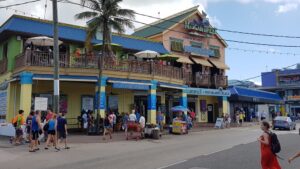
But, like every vacation destination, long-term Caribbean living can be a bit different than your week-long holiday with the family.
It is not really a slow, sleepy island you might picture, either.
So, what’s the reality?
This capital city actually sits somewhere in between. Here, you get office buildings with a legitimate financial sector, but also waterfront views and access to quick grocery runs. There’s also humid afternoons and local beach goers mingling with the working crowd.
After all, Seven Mile Beach is just a 5 minute drive away from the center of George Town.
Still, that balance cuts both ways good and bad, and that is really the whole story here.
You can have a pretty fun day-to-day life, with beaches nearby, a compact layout, and a generally tidy environment, yet you also have to live with eye-watering prices and traffic level that is strangely disproportionate for such a small island, all with fewer choices than a bigger country usually gives you.
Fundamentally, George Town suits people who want convenience with a warm-weather lifestyle.
But, on the other hand, anyone expecting cheap Caribbean ease or a life that feels totally carefree might be a little caught off guard once the real bills, the commute, and the practical routines start getting ingrained into daily life.
Now, that does not make the city disappointing.
It just means that George Town is better understood as a functioning capital with a very pleasant setting that also has it quirks and downsides.
You might actually say that that realism is part of the appeal since it’s not a full resort paradise.
It can feel beautiful and still highly livable, yet it also demands a certain amount of flexibility and patience.
It’s up to you to decide if the island life is worth the monetary and mental premium.
Daily Life in George Town
So, what is a day in the life of a George Towner like?
On the surface, it is often simple to organize, and that alone is the first major plus.
You can usually get to anywhere you want without pre-planning your route.
Getting to work, the local food market, the airport, a pharmacy, or a local indie coffee stop can all be reached without crossing some giant tangles of urban sprawl.
That also means no connecting through 3 different modes of transportation to get across town.
At the same time, the rhythm of the place is not slow and lethargic in every corner of the city.
George Town is still the business center of the Cayman Islands, so weekday mornings go at a pace that is bit corporate, especially in the commercial core where people are moving between offices, banks, and the myriad of government buildings.
Still, by island standards, it is remarkably convenient.
That is one of the first things many residents notice. You can structure your day with a lot less wasted travel time than in larger cities, and that translates into less time commuting and more time for serendipitous chats with friends and colleagues you find during the day.
Moreover, George Town can feel very connected socially, which is comforting for most new (and old) residents. People often know each other, or know of each other, and that gives the community a more visible, more personal character.
Yet, that same closeness can make the town feel a little small when you want privacy or a clean break from the usual circles.
Of course, the smaller scale also brings repetition.
After a while, the same roads, the same social circles, the same shopping options, and the same familiar routine can make life feel a bit boxed in. George Town is home to less than 50,000 residents living full-time, so it’s not exactly at the cutting edge of transformation, either.
Basically, everyday living here is efficient, but not expansive. It is convenient, but not hugely varied.
For many households, that trade-off feels more than fair because the practical ease is quite attractive, though for others the compactness starts to feel tight after enough time passes.
Weather
The weather in George Town is probably known to be one of the biggest parts of what attracts full-timers here.
However, in some ways, it is already one of the long-term challenges to seriously consider at the climate in the Caribbean continues to evolve.
First, the dream.
You are guaranteed warm temperatures, immaculately bright water, sunny coastlines, and many outdoor-friendly days. It can make the ordinary feel like a vacation every day.
For locals, it is not unusual for them to plan walks, beach visits, boating time, outside lunches, and evening meetups around the fact that the warm air and sea breeze can be counted on.
Once you experience this type of consistency, you’ll never know how you lived so long suffering without it.
Still, tropical heat is not charming every single day.
There are stretches when the humidity feels absolutely draining to your body and your soul.
The warm weather loses a little of its romance once it becomes your everyday backdrop instead of your holiday treat.
Then there is the wet season, which might be getting more and more intense.
Rain can come down hard and fast, and hurricane season adds a level of uncertainty that residents will always have to take extremely seriously.
Living on an island in the Caribbean means that weather can give you happiness, but also quite a bit of stress.
Even so, many people would still rank climate as one of George Town’s strongest advantages.
The chance to live somewhere that supports an outdoor lifestyle through virtually all of the year is a huge benefit. First-timers can definitely notice the changes in their emotional feelings compared to their life in colder climates.
So, yes, the weather is beautiful, but it is not effortless.
Cost of Living in George Town, Cayman Islands in 2026
Hold on tight, because this is where George Town can get extreme.
The cost of living is high. Like, really high.
And, it’s not just in one or two isolated areas.
There is not one category that does not have elevated prices – housing, groceries, dining out, household basics, and even everyday services are all much more expensive that their typical counterpart back on the mainland.
Rent, in particular, can hit your wallet pretty darn hard.
If you want to live in a desirable area with good access to central George Town or other popular parts of Grand Cayman, you will likely pay a handsome premium for that privilege.
For many residents, housing is the single biggest financial piece of the pie.
Numbers-wise, it is roughly double the cost compared to the U.S. average.
Unluckily, groceries do not offer much relief, either. Since the vast, vast majority of products are imported, your weekly food bill can rise fast, especially if you prefer certain brands or specialty ingredients.
We are taking 50% more expensive than food back in Texas, for example.
Still, the story is not completely bleak. Some people live here quite comfortably because their income matches the island’s cost structure, or because they can an expat contract that also provides housing support or relocation benefits.
On the other hand, if your earnings do not line up well with local costs, George Town can be financially stressful.
That is really the blunt version of it.
The Cayman Islands is not a low-cost paradise. It is actually one of the most expensive places to live in the Caribbean, if not the world.
You will need to budget here.
Shopping
While prices are indeed high, shopping around George Town is still easy and you’ll find everything you need, though it does not offer the endless selection people from larger cities may be used to.
You can get the essentials and the island’s main commercial areas are filled with every sort of store, so you can bundle all your trips into one.
In a practical sense, shopping is organized and manageable.
Still, the variety here has its limits.
If you want something very specific, highly specialized, or tied to a niche brand, there is a decent chance you will have to order it or settle for an alternative that not exactly perfect.
There are no Walmarts or Costcos anywhere in the Cayman Islands.
But, that just means you have to be a bit more strategic and plan and improvise a little more.
That is not necessarily bad, though it can be mildly frustrating when prices are already high and selection is only moderate.
Parts of George Town do have an upscale retail vibe, especially in areas that cater to visitors, so you can still get luxury goods at least.
But, residents here lean on Amazon and other international sellers to fulfill their niche needs. It also won’t matter if you’re a Prime member or not – those packages are just going to come when they come.
Traffic
Traffic is an element that surprises many people about the Caymans.
The island is small, even smaller than Rhode Island, which the smallest state in the U.S., yet the congestion is still pretty irritating.
It’s technically a bit more dense during rush hour, but it seems like every hour of the day is filled with cars and motorcycles.
Morning traffic can especially feel oddly disproportionate to the size of this place.
The issue is not that distances are enormous, because they are not. The issue is that the bottlenecks are hard to avoid and there are limited routes to the popular districts of town.
Most residents rely heavily on cars, so you really don’t walk to places. There are also public transport options, but they do not usually remove the need for your own car, especially if you want flexibility and control over your own schedule.
But even still, a frustrating drive in George Town may be shorter than a routine commute in a major mainland city. 30 to 45 minutes of congestion on the road might be better than an hour and a half of steady movement.
Having Fun in George Town
Leisure activities in George Town are one of the primary reasons why you’d want to live here full-time.
The are boundless and heavily shaped by the outdoors and the water
Free time often revolves around anything water-related: beach visits, boating, snorkeling, or paddleboarding. Of course, folks also go out to restaurants and get drinks by the waterfront drinks.
For many residents, that tropic living is one of the biggest rewards of living here.
A normal weekend can include a trip to Seven Mile Beach and a hike through the mangroves, making it feel like a never-ending vacation.
Still, the variety of entertainment across the Cayman islands is not endless.
George Town does not attract many big music acts and its performing arts scene is quite limited. Its premier opera house, The Harquail Theatre, seats just 300 guests, so it’s not exactly La Scala.
There also aren’t big fairs or carnivals that take place, so those expecting the same community events from back home bit be a little disappointed.
In a way, the leisure life here mirrors the island itself.
The quality can be very high, but the range is more limited. So, if your idea of a good life is sunshine and water, George Town can feel extremely rewarding.
But, if you need constant novelty, you might eventually feel a bit bored after a while.
Quality of Education
For families, education should be a major part of the decision-making process,
Luckily, George Town generally offers a dependable educational environment.
There are many schooling options on Grand Cayman that many parents find suitable, including a mix of public schools and private ones like Cayman International School and Cayman Prep and High School.
With that said, education can add serious cost to an already expensive lifestyle. Private schooling can cost thousands of dollars just for tuition. For instance, Cayman Prep and High School charges tuition as high as $20,000 USD per year.
Still, there is a community advantage here.
The island’s smaller scale often means families feel more connected to schools, administrators, and other parents, creating a stronger sense of involvement.
But, on the other hand, the range of academic paths is naturally narrower than in a large country with specialty programs.
Some families may feel that there are fewer tailored choices than they hoped for, so be sure to research what is available and understand if what your kids might be good at before deciding on moving.
Basically, the education here requires some planning and, quite often, a strong budget.
Ease of Travel
One of George Town’s most useful advantages is its connection to an international airport and the relative ease of getting on and off the island.
For a place that can feel small in everyday life, Grand Cayman is well linked for regional and international travel through Owen Roberts International Airport.
You can hop on direct flights to neighboring islands like Jamaica and Turks and Caicos in just an hour or two. Meanwhile, New York City is just a 3 hour, 45 minute direct flight from here as well.
Still, island travel always comes with a few complications. Flights can be expensive and route options are not as broad as in major global hubs.
Weather can occasionally disrupt plans during the rougher periods of the year as well, which is exactly when you might want to leave.
This contrast creates a slightly strange imbalance: you can reach other places without too much difficulty, especially some of the world’s best resorts, yet you are limited by exactly where to go given the routes offered and time of year.
Even so, many residents are perfectly comfortable with that arrangement. If you have enough money to withstand the cost of living here, you’ll probably be flexible enough to put together a good travel schedule every year without denting your budget too much.
Your Decision
Basically, George Town is best for people whose expectations match what it actually is.
If you want a clean, compact, beautiful place where ordinary life goes on near the water, it can feel like a deeply satisfying place to spend your days.
So, the honest version is this: George Town is vibrant, livable, and often genuinely lovely, yet it asks for your patience (and your money) alongside some realistic expectations.
It’s the closest you’ll get to paradise, but, as with everything in life, it still ain’t perfect.